
"Starting a business with your own funds, that was perfect for us. No boss, no bank, ... No one breathing down our necks about anything."
Franco Salerno, Darianna Bridal & Tuxedo
From a Financial Plan on a Cocktail Napkin to a Top 100 Business of 2020
Franco & Wendy Salerno
Quick Facts
Location
Business Type
Independent
In Business Since
2013
Customer Since
2012
Employees
11-50
Their Story
Franco and Wendy Salerno spent years closing real estate deals, but they were ready to invest in something of their own. Trading property listings for product shelves, they took a bold leap into the world of retail. It began when they identified a need in their community – there was no nearby shop for their daughter to buy a prom dress. This moment of frustration, expressed during a traffic jam, was the catalyst for Darianna Bridal & Tuxedo, a beloved bridal and tuxedo boutique in Warrington, Pennsylvania.
In his “Create the Life You Want” podcast, Guidant Financial co-founder and CEO Jeremy Ames talked to the Salernos about the challenges they faced, from convincing landlords to give them a chance as newcomers with no retail experience to managing extensive inventory demands. They saw a need, took a leap, and built a business that not only fills the gap but also enriches the community.
Seeing a Need and Developing a Plan
Why a prom and bridal store? The Salernos were already self-employed as successful real estate agents. But once their own daughter started being invited to formal dances, they realized “there really wasn’t a close store to us to buy a formal dress,” as Wendy observes.
The Salernos didn’t just get frustrated at their family’s situation: they realized an unfilled business niche existed. “We’re in a very populated area,” Wendy explains. “There’s quite a few school districts around us. And I thought, ‘I can’t be the only parent who’s saying the same thing.'” So the Salernos did a little research on populations in the schools.
Then, flying back from an overseas trip, the Salernos sketched out a preliminary business plan. “We wrote out our plan on a drinks napkin, using conservative budgeting,” Franco says. “We started with a financial plan. The assumptions were ‘this school has 400 students in 11th and 12th grade, and probably 50 percent to 75 percent go to prom.’ We could probably, conservatively, capture 10 percent of those for prom gowns. Then we just started building that revenue out. We estimated utilities, estimated payroll, and then we built the financial plan.”
Funding a Business

The Salernos took a creative approach to funding their business, using their own retirement savings through a method called Rollovers for Business Startups (ROBS). This strategy, offered by companies like Guidant Financial, allowed them to invest their 401(k) funds into their new venture without taking on debt or giving up equity. By using ROBS, they maintained full control over their business decisions from day one.
“Starting a business with your own funds, that was perfect for us,” Franco says. “No boss, no bank, no one breathing down our necks about anything.”
Finding a Location: Chains and Experience Only, Please
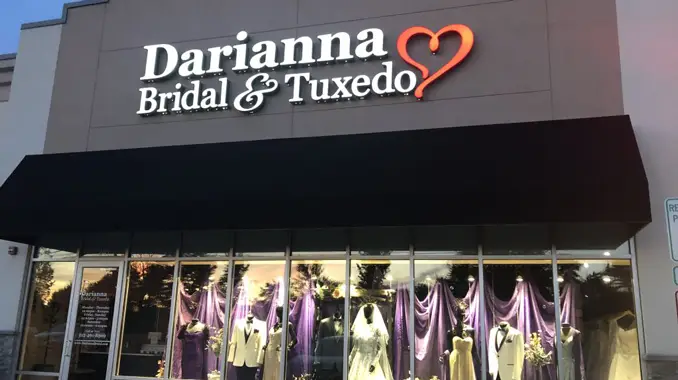
Despite the business plan, though, the Salernos faced their first challenge right off the bat: landlords didn’t want to rent to someone who had no retail track record.
“We started searching for real estate and were basically shot down by most people. They said to us, ‘wait a minute, you have no retail experience in this industry?’ And we didn’t,” says Franco.
But it wasn’t only that. Landlords in the area wanted chains already recognizable to customers. “They said ‘we want national or regional chains in our shopping center,'” notes Franco.
Frustratingly, the landlords didn’t even look at the business plan. “There was no research that even went into it from their part, no credit check, no financial statements, nothing like that,” he observes.
Despite that, the Francos were undeterred. Ultimately, “we found a space a mile from our house and the landlord was very interested in speaking to us,” Franco goes on. “We basically had a contractor come and take a look at the space. We drew out on a little piece of paper, ‘This is what we want and how much would it cost to do this.’ We negotiated with the landlord to help us with a little build-out money.”
Once they had a space, their business took off. Their business expanded so much within the first six months that they needed a larger space. “We opened on January 7, 2013. We were overrun with people buying $350 to $500 prom dresses,” Franco says.
Because of that demand, their revenue was “through the roof,” says Franco. “Expenses were pretty spot on with our forecast.”
Within six months, the Salernos knew they needed a bigger space. In 2015, they moved into a store that was triple the size of the initial one.
Inventory: The Next Challenge
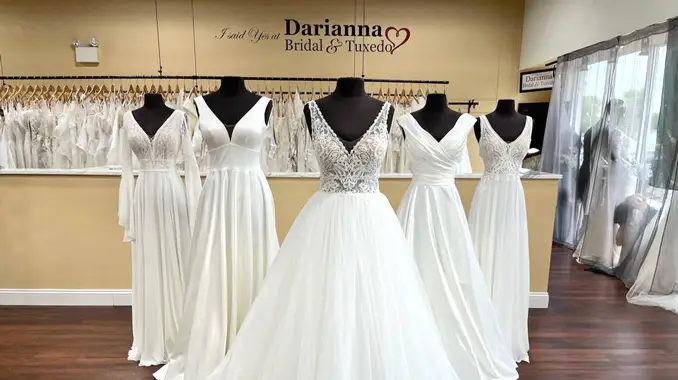
So the Salernos had burgeoning revenue and controlled expenses. All good, right? Not quite. Success can sink inventory-dependent businesses because their growth – which seems positive – creates a massive cash need. As Franco puts it, “to sell $1 million of product costs $500,000 in inventory,” which can create a cash crunch for a small business.
But the Salernos showed creativity in finding a solution to managing their inventory. They kept one model in the store for customers to try on. If they wanted it, their dress was ordered specifically for them. It was dropped shipped to Darianna.
As Franco explains, “If I need a $350 prom dress, we order it rather than having it in inventory. It’s already a sale, we have the money for it. The supplier is 45 minutes from us, and they send it UPS. The trade-off with shipping is that the margin isn’t as good, but we don’t have to finance the inventory.”
Drop shipping as a solution to inventory expenses and risk is viable in the prom business because customers typically shop in advance. Similarly, brides start shopping for bridal wear nine to 12 months in advance.
Expanding and Growing
Although Darianna started because of a need for prom dresses, the Francos expanded very shortly into two areas linked within the industry: bridal dresses and formal tuxedos for both proms and bridal parties.
The couple has mastered the art of running a seasonal business so well that they stay cash-positive year-round – a rare and impressive feat in an industry where most struggle to break even during off-seasons.
First, they extend the season as much as they can. Many weddings happen in the spring and summer, for example. Still, autumn is also popular in their area because fall foliage provides a scenic backdrop for wedding pictures. Brides in some careers, like teachers, tend to get married around Thanksgiving and Christmas because that is when they have time to take a honeymoon.
Second, they’ve expanded into related services, such as bridal gown preservation and dressing parents of the bride.
Their business has made such a mark that the U.S. Chamber of Commerce named them one of the Top 100 Small Businesses of 2024 – a true honor in the entrepreneurial world.
How It Changed Their Life: Traveling with Family
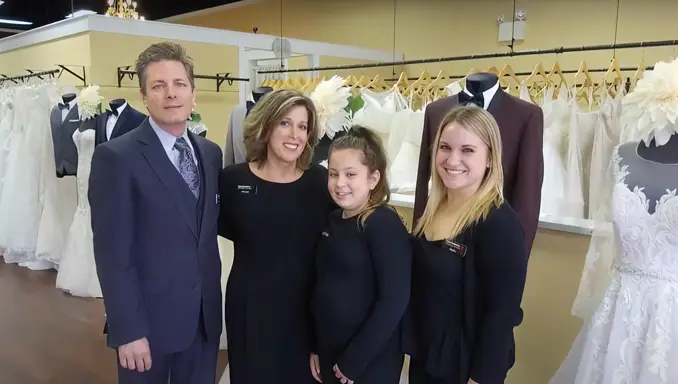
The Salernos have found that owning their business not only supports their family financially but also enriches their personal lives. Their clever use of credit card points, accumulated from necessary business expenses, has opened the door to extensive family vacations. This system has allowed them to cultivate a tradition of taking month-long trips with their two daughters, a practice they plan to continue as their business matures and their team grows.
Despite their ability to travel, the Salernos emphasize the importance of staying connected to their business. They often manage customer interactions remotely through digital platforms, ensuring that even from afar, customer service remains a priority. This balance of flexibility and responsibility has become a cornerstone of their business model, allowing them personal freedom while maintaining their commitment to their customers.
Their daughters also work in the business, contributing to its family-centered approach.
Adaptability and Hard Work To Create a Successful Small Business
Despite initial setbacks and a steep learning curve, the Salernos’ creative approach and resilience allowed them to build a thriving business. Their use of Rollovers for Business Startups (ROBS) played a pivotal role in this success, providing them with the financial foundation to expand without incurring debt.
Their narrative highlights the importance of adaptability and hard work in entrepreneurship, demonstrating how taking calculated risks, leveraging personal experiences, and utilizing innovative funding methods like ROBS can create not just a business, but a lifestyle that aligns with one’s aspirations and values.
As they reflect on their journey, the Salernos share the fulfillment that comes from watching a simple idea grow into a cornerstone of their local community, improving their lives and those around them.
To hear more about the Salernos and their journey, listen to the “Create the Life You Want” podcast with Jeremy Ames:
· YouTube
· Apple
· Spotify
Ready to start your dream business?
We can help you with the first step. Pre-qualify today for Small Business Financing.