Investing in a business is one of the most significant financial decisions you’ll make. When putting hundreds of thousands — or even millions — of dollars on the line, it’s natural to focus on the financials. You want to be confident that you’ll not only recoup your investment but also see a solid return.
However, focusing exclusively on the numbers can be as risky as ignoring them entirely. Buying a business isn’t just about the price you pay; it’s about what you can do with it after the purchase.
Getting a great deal on a bad business is still bad business. On the other hand, paying a premium for a company with strong growth potential can lead to a much better outcome. Why? Because the real value lies in your ability to grow and improve the business.
To help you evaluate beyond the balance sheet, here are four overlooked areas to consider before signing on the dotted line:
1. Owner Role: Does the Business Fit Your Strengths?
Every business has a leadership gap — an area where your strengths can make the most significant impact. Before buying a business, assess the current owner’s role and the skills the company needs most to grow.
Does it require someone to:
- Focus on sales and business development?
- Tighten up operations?
- Amplify marketing efforts?
- Innovate product or service expansion?
Now, compare those needs to your strengths. Are you skilled in the areas the business requires, or would you be stepping into a role that doesn’t match your talents?
Finding this alignment between your strengths and the business’s needs can be the difference between steady growth and frustration.
Take my college roommate, Scott. He purchased a high-end raft distributorship with a solid manufacturing foundation. What the business needed was sales and business development expertise. After a 20-year career in medical device sales, Scott knew this was his wheelhouse. By leveraging his expertise, he propelled the business forward.
2. Value-Add Opportunity: How Can You Improve the Business?

Businesses are priced based on historical performance. Your returns, however, depend on your ability to increase value in the future.
Ask yourself:
- Are there underutilized assets you can maximize?
- Can you introduce efficiencies through technology?
- Does the business align with your knowledge or existing network?
An experienced entrepreneur, Jason Bowman openly admits he “overpaid” for his acquisitions by industry standards. But for him, the deals were a great fit. Why? The businesses aligned geographically with his existing operations, allowed for operational efficiencies, and gave him room to apply his expertise to drive growth.
Another entrepreneur I know applies what he calls the “fax machine test.” If a business still relies on outdated tools, like a fax machine, he sees it as an indicator of untapped potential. He buys these businesses, modernizes their processes, and unlocks efficiencies to boost profitability.
3. Purpose: Does the Business Align with Your Values?
A business’s purpose is more than its products or services. It’s the problem it solves or the benefit it provides. The closer that purpose aligns with your values, the more likely you will persevere during tough times.
Take a water restoration business. I have never met someone who considers water restoration a hobby. Yet, its purpose — bringing peace of mind to families after a disaster — might resonate deeply with someone who values helping others in crises.
Purpose matters because challenges are inevitable in any business. If it’s only about the money, you’re more likely to quit when things get hard. But a deeper purpose drives resilience and can even reveal expansion opportunities. For instance, a deeper purpose can help you navigate decisions like whether to expand into mold remediation or asbestos removal in a water restoration business.
4. Needs Alignment: Does the Business Fit Your Life?

A successful business isn’t just about making money — it’s about how well the company fits your lifestyle, financial needs, and long-term goals.
- Work Hours: Are you willing to work nights and weekends, or do you prefer a 9-to-5 schedule?
- Income: Do you need immediate cash flow, or can you afford to wait for the business to stabilize?
- Growth vs. Stability: Are you looking for a high-growth opportunity or prefer a steady, predictable income stream?
For example, if you need a steady paycheck immediately, you might prioritize acquiring an existing business where your salary is already factored into the financials.
A Balanced Approach
Buying a business isn’t just about finding a good deal — it’s about finding the right business for you. While financials are the foundation, they’re only one part of the equation. Evaluating a business through the lens of your strengths, value-add potential, purpose, and lifestyle ensures you’ll sustain the business and amplify your long-term return.
The right business isn’t just about the numbers—it’s about building a life that delivers financial rewards and fulfillment as you grow something meaningful.
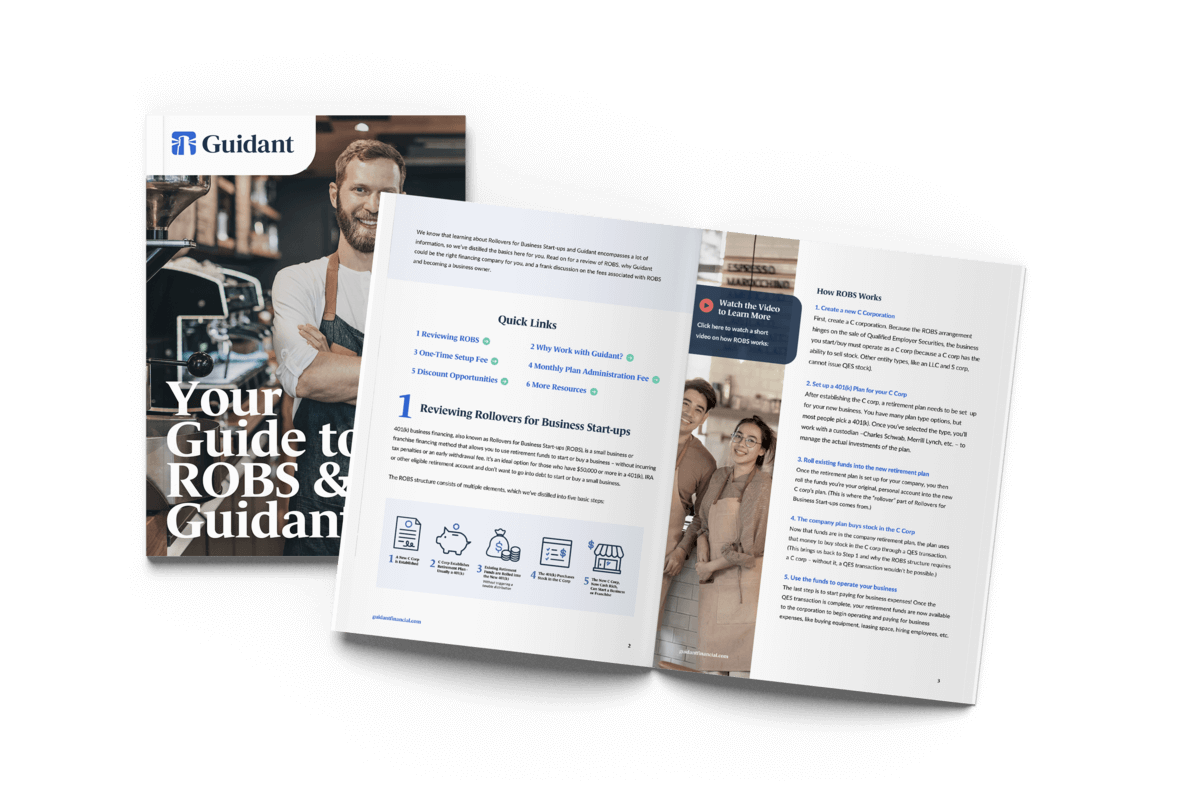
Ready to start your journey to business ownership? Let Guidant Financial guide you. We’re experts in Rollovers for Business Startups (ROBS) and creative financing options designed to launch your small business successfully.
Call us today at 425-289-3200 for a free, no-pressure business consultation to get started — or pre-qualify in minutes for business financing now!
Jeremy Ames is the Co-Founder and CEO of Guidant Financial, a company that has helped launch of over 30,000 small businesses since 2003. Jeremy’s experience as a business owner spans both franchises and start-ups. He has owned three franchise businesses across the real estate, personal services, and wellness sectors and also founded or co-founded five other businesses, including ventures in the media and business services industries. He is a staunch advocate for small business ownership, believing it to be the best route to personal and financial independence.