Do you want to start a new business? Whether you’re dreaming of turning a passion into a paycheck or aiming to create the next big thing, the path to entrepreneurship is a thrilling one. But it can often be complex and overwhelming.
In this article, we’ll explore five essential tips on starting a business that will help you lay a solid foundation for your venture. From creating a plan to managing your finances wisely, these strategies are designed to keep you on track toward building a thriving business.
5 Tips on Starting a Small Business

1. Plan it Out
The first step to starting a business involves planning. You can’t have a business without a plan. That’s why it’s a smart move to start with a solid business plan. You can do this yourself or hire someone to help you. Your business plan can address the following components: an executive summary, company description, market analysis, organization and management, and marketing and sales, among other sections.
You’ll also want to consider your business structure at this point in the road; options include C Corporations, S Corporations, Limited Liability Corporations (LLCs), Sole Proprietorships, and Partnerships. You can read more about the types on the Small Business Administration site.
Want to write a comprehensive business plan that can get approved for a business loan? See our guide to writing a strong business plan here.
2. Figure Out Your Financials
Similar to making a business plan, you’ll want to assess your financials. Start by looking at all of your personal finances, from assets to debt. Determine if you’ll need funding or a business loan and what type of funding may be right for you.
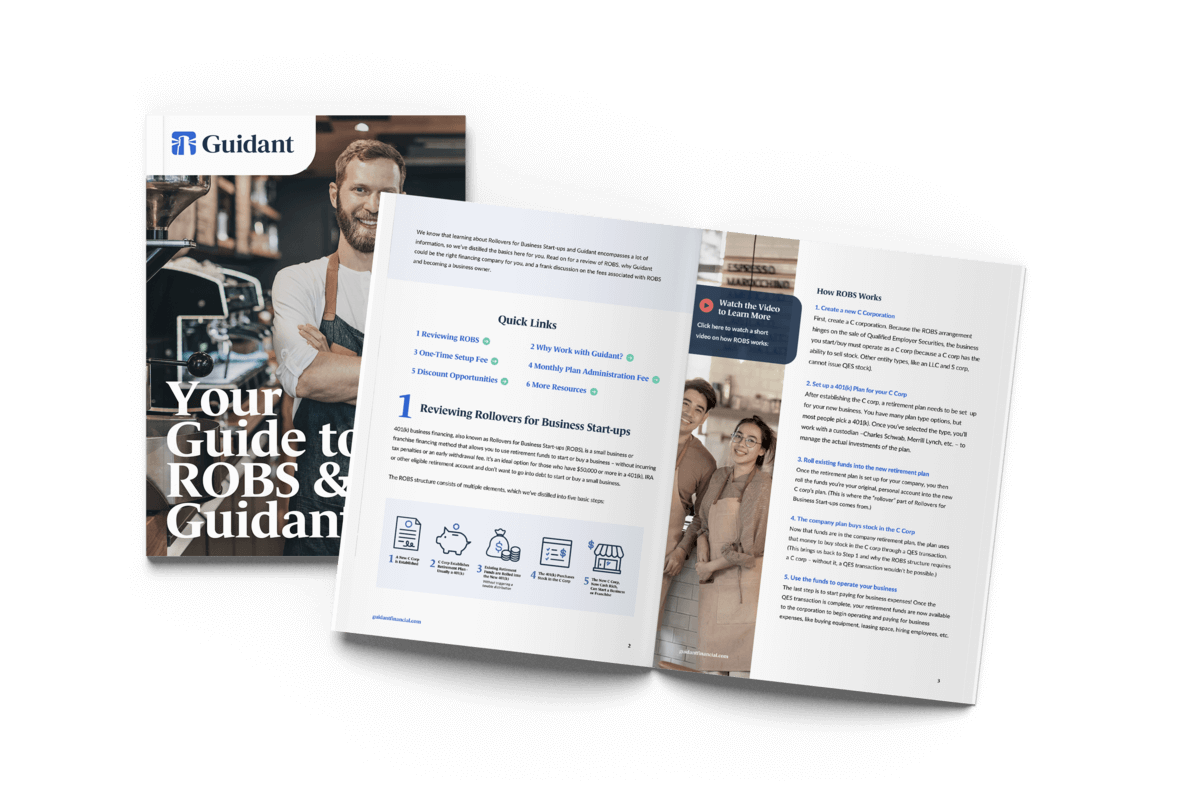
Guidant offers a variety of financing options, from Rollovers for Business Startups (ROBS) (also known as 401(k) business financing) to Small Business Administration loans and unsecured loans. You can read about all the types in this article which gives you a rundown of the top 7 types of small business funding for your business entity.
Budgeting is key for business owners to master at the beginning of their business journey. You’ll want to open a separate business account for your business finances and keep everything apart from your personal finances. Start by setting goals and objectives, then make a list of your expenses so you’ll know what expenses come out and when, as well as how it all impacts your budget for the year. It’s also critical to have a rainy day fund or emergency fund, if you’re able.
If finances aren’t your favorite aspect of running a business, Guidant can help. Guidant offers Payroll Services as well as Bookkeeping & Tax Services to help you through these critical tasks. Working with Guidant experts can also save time and money.
Looking to fuel your business dream? Here’s the 7 Best Options for Small Business Funding.
3. Stay Abreast of Industry Trends
It’s time to get to know your industry. Is it fintech? How about marketing? Accounting? Or retail? Each industry has its own set of challenges and trends today – and you want to be familiar with them so you can be successful and gain a strong customer base.
The U.S. Bureau of Labor Statistics has an “Industries at a Glance” section on its website, and the U.S. Census Bureau has a section called “Your Business and Industry,” as well. Take some time to learn about your industry on these sites. A simple online search is always helpful, too. And, of course, you can always reach out to former colleagues and work friends to discuss what’s going on in the industry.
Dive into this year’s Small Business Trends study to discover the key trends and challenges facing small business owners across the U.S.
4. Always be Learning
There are more options and opportunities to be a lifelong learner today than ever before. LinkedIn offers courses by industry or specialty, your local community college offers online courses and talks, the internet is ripe with information via a search, and your local library or bookstore also provides shelves full of books about business topics.
Some entrepreneurs even pursue a degree in an area such as digital marketing or accounting if they don’t already have one and are interested in strengthening their skills. You can also talk to current business owners about what’s working for them (and what’s not). Finally, Harvard Business School offers online courses to help you expand your skills and engage with global learners just like you.
5. Know When to Pivot
Just as knowing when to go for it and get started, knowing when to pivot is also critical advice for starting a small business. Just think – what if all the businesses that pivoted during the pandemic didn’t? They would have likely closed down. But instead, many businesses found new ways to operate safely that even provided new revenue streams and opportunities for customers.
For example, many restaurants started providing to-go options, meal kits, and more. Some are still going strong today, even after opening their dining areas back up. For retailers, online ordering and drive-up service became the norm. Again, many are still operating both models today, making twice the revenue. The point is being agile and knowing when it’s time to make a change can be the difference between business failure and business success.
Ready to start your own business? See 10 Steps to Starting a Business next.
From Starting Line to Finish
Your journey to start a good business will be different from everyone else’s. But now you have the tips you need to get started.
Remember, your business plan is your map for your company’s growth – and a tool to attract investors when you’re ready. By focusing on your finances up-front and securing funding if needed, you’ll also be one step closer to reaching your goal of starting your business and gaining your target customers. And if you ever get in trouble, simply ask for help. You won’t be the first entrepreneur to need a little assistance from a trusted mentor or other entrepreneur. By continuously learning about your industry and business – and staying flexible and adapting to changing market dynamics – you should be well on your way to securing your spot as a successful business owner.
Do you have a business idea and business model and now you need financing? Guidant Financial can help. You can pre-qualify now and get started!

“When Falling Sky Brewing presented itself as a great opportunity for me, I needed the capital. Traditional lenders weren’t going to do it. I took a chance on myself that I could grow my business and my 401(k)… And I thought, ‘You know what? I could do this without overhanging debt.‘”
— Stephen Such, Falling Sky Brewing
Read the stories of REAL small business owners who work with Guidant.