Securing business funding is an exciting but challenging process, and avoiding common missteps can make all the difference. The first step to a successful funding strategy is understanding what could go wrong. To that end, here are seven key mistakes to steer clear of when financing a business.
7 Common Funding Small Business Mistakes
1. Failing to Assess the Company’s Financial Situation

Whether you’re seeking funding from a lender or investors, they’re going to want to know your company’s financial situation. If you’re working with a lender such as a bank, they will want to feel assured that they will be paid back over time. If you’re working with potential investors, they will want to feel assured that this is a good investment of their money, resulting in an equity stake that increases in value.
To that end, you will need to know – and show – your financial situation. Not doing so, or doing a poor job, is one of the most common mistakes in business. A record of past income and expenses is foundational, as well as a forecast of three to five years in the future for income and expenses. You will need an income statement, a balance sheet and cash flow statement.
You will also need strong reasons for the funding. What do you plan to do with the money? Why do you need it? What will it add to the business? Without this understanding, it’s challenging to make informed decisions or present a compelling case to potential funders.
Starting a business? Discover the top three financial mistakes to avoid with insights from Miri Wroten, the Senior Director of Financial Services at Guidant Financial.
2. Lack of a Detailed Financial Plan
You also need a detailed financial plan. This plan should cover vital aspects of your business plan, such as your mission, your products, your assessment of the competition and target market and your growth potential. Who do you expect to buy your product(s)? Who are potential customers? Is there growth in the customer and product markets? Do you plan to expand? What are profit and operating margins like?
A detailed financial plan should articulate how you intend to utilize the funds, showcasing a clear strategy for growth and repayment, which is often a critical requirement for lenders and investors.
Looking to write a business plan that will get approved for a loan? Check out our guide here.
3. Unrealistic Financial Expectations
Unfortunately, setting unrealistic financial expectations in your business model and financial projections is one of the all-too-common small business mistakes. Your potential funders will scrutinize your forecasts for sales, cash flow, operating expenses, and so forth very carefully. Make sure that, if anything, you underestimate your financial expectations. Why? Because overestimation can lead to severe financial strain.
Do your homework in setting expectations for business finances. Research your competitors’ growth patterns, products and target markets. Research professional forecasts in your sector and industry. Talk to people involved in the same business and to experts in small business growth. Ask them whether they think your growth targets and financial expectations are realistic and take any advice they give you seriously.
4. Choosing the Wrong Funding Partner

The choice of whom to partner with for funding is one of your most important financial decisions and should not be taken lightly. Properly screening potential lenders or investors to ensure that they are realistic funding prospects for your business is essential. It’s also vital that they align with your business goals and values.
Lenders
If you are approaching a lender, research them. Some lenders may not tend to fund startups, for example, viewing them as overly risky. Other lenders may specialize in a specific industry or sector. Your chances of securing funding will be optimized if you choose a lender whose specializations or expertise match your company.
Next, discuss lender requirements with them before fully completing a loan application. Many lenders, such as banks and credit unions have very specific requirements and will deny applications from companies that don’t meet them.
Their requirements are known as the five C’s: credit, capital, capacity, collateral and character. Credit refers to your business’s (and potentially your personal) creditworthiness, as show in credit ratings and history of repaying debts. Many lenders require a specific credit score – if you or your business can’t show these, you need to find another funding source.
Capital refers to having sufficient capital for down payments. Many lenders require up to a 20 percent down payment. Capacity means your business’s capacity to pay debt service over time. Collateral refers to your ability to collateralize the loan, as some lenders require collateral to lessen the risk. You may have to use a personal asset, such as a house or business asset, as collateral. Finally, character refers to your standing in the community and among your small business peers. Lenders will look for any history of failure to meet obligations, such as bankruptcy, or indicators of poor character or choices, such as criminal convictions.
Investors
You also need to research potential investors. Like lenders, investors will look for your ability to repay and to run the business successfully. Some investors or investor groups specialize in specific industries or sectors or in specific stages in a business’s life cycle, such as startups (seed capital or angel investing) or the period after a startup has been successful (venture capital), and there is room for growth. With investors, too, there is little point approaching one that doesn’t fit your company’s sector or growth stage. You’ll have a much better chance if you pick one whose mission and goals match what your company stands for.
You also need to pay attention to the fit between yourself and potential investors. Investors will own part of your company – which makes them very different from lenders. They can make suggestions about multiple aspects of the company, and you must pay attention because they are partial owners. They need to be on board with your abilities and plans and to align with your direction for the company.
Mentorship as Part of Funding
One last word about choosing a lender. Mentorship and advice from business experts can very much be a part of funding. Many lenders and many investors know a great deal about your industry, as well as common issues in growing a business and how to approach common issues entrepreneurs face – and pitfalls to avoid. While the ability of a given lender or group of lenders is not the only reason to choose them, it can add value to a prudent decision to go with one lender over another.
5. Relinquishing Control of the Business
While we’ve mentioned the need for a good fit between yourself and potential equity investors, it’s also important to understand an additional fact about equity investors. It could not be a good idea for you or your business to use this funding method for several reasons.
First, you are giving up at least some control over the business in exchange for the funding. Your investors may weigh in on multiple issues, including direction, product lines, employment choices, and more. You may not feel comfortable with their involvement. In addition, it is possible that their suggestions or requests, if they conflict with your own, are not actually prudent or effective. They could also be designed to take the company in a different direction than the one you want, such as issuing shares for a fully public company if you want it to remain private.
Second, you could lose your ability to make decisions in the company entirely. Business history is full of stories in which a founder or chief executive officer is deposed in favor of a management team brought in by investors.
Equity funding can be a powerful method of funding, but it does pay to be cautious about giving up equity; only do so when the value exchanged is clear and justified.
6. Demonstrating Poor Timing in Securing Funding

Timing is everything in moving toward obtaining funding. If you secure financing too early, you may be in unnecessary debt. Debt service can sink a fledging company that doesn’t have sufficient cash flow to cover the payments and other business needs. Make sure that you have demonstrated cash flow sufficient to make payments and keep the business on a comfortable footing.
On the other hand, though, you don’t want to secure funding too late. Funding that comes too late can stall growth – and that also could ultimately capsize your company. It’s a good idea to keep steady track of your sales, expenses and cash flow, so that you know when you need funding, for necessary equipment, an expansion or more.
Ready to fund your business? Explore the 7 best options to get the support you need here!
7. Failing to Consult with Financial Experts
Consulting with financial experts such as financial advisors, accountants, mentors, and even experienced business owners – as well as potential lenders or investors themselves – can provide invaluable insights into funding options, terms, and potential risks. Consultations and ongoing conversations with them can help guide you to make the best decisions for the business’s future.
Let Guidant Financial Help You With Small Business Funding Decisions
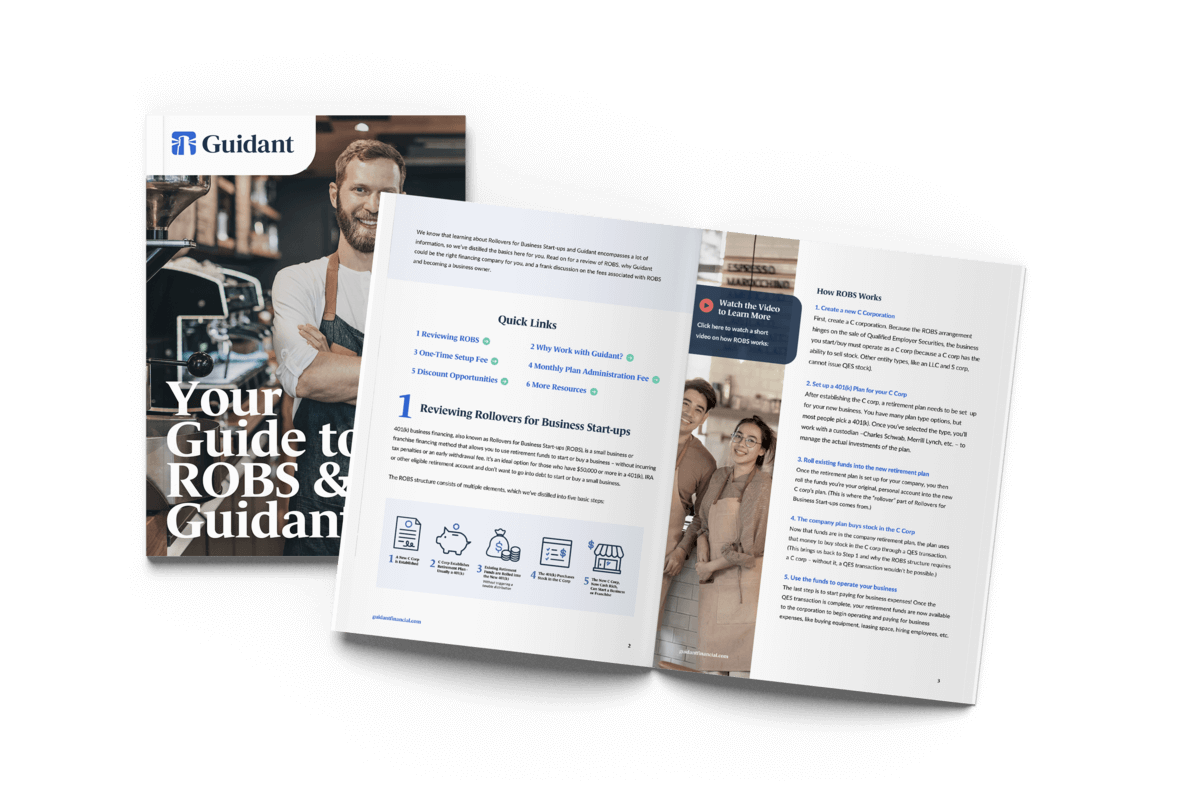
Guidant Financial advisors have decades of experience helping small business owners to make the best funding decisions for their companies — helping over 30,000 businesses nationwide. We advise on lenders, including those for U.S. Small Business Administration (SBA) loans, and on lending methods, including Rollovers for Business Startups (ROBS), a method of using your own retirement funds in combination with other funding methods or as a strategy to avoid or minimize debt service and retain control.
Call us today at 425-289-3200 for a free, no-pressure business consultation to get started — or pre-qualify in minutes for business financing now!

“When Falling Sky Brewing presented itself as a great opportunity for me, I needed the capital. Traditional lenders weren’t going to do it. I took a chance on myself that I could grow my business and my 401(k)… And I thought, ‘You know what? I could do this without overhanging debt.‘”
— Stephen Such, Falling Sky Brewing
Read the stories of REAL small business owners who work with Guidant.