One of the first and biggest decisions every aspiring entrepreneur faces is also one of the most personal: Should I buy an existing business or build one from the ground up? There’s no single right answer. But understanding the trade-offs can help you make a choice that fits your goals, your finances, and the life you’re trying to build.
The Case for Buying an Existing Business
If you want to hit the ground running, buying an existing business is often the faster path to income. The customers are already there. The systems are already built. Revenue is already flowing in. You’re not starting from zero. You’re stepping into something that already works.
That’s a significant advantage. Many existing businesses already have owner-operator compensation built into their financials, which means you could draw a paycheck from day one – something that’s rarely possible when you’re building from scratch. And because a foundation is already in place, you can shift your focus to improving profitability rather than spending all your energy just getting the doors open.
Lenders and investors also tend to view established businesses more favorably. A proven track record of revenue reduces their risk, which can make it easier to secure financing, including options like SBA loans or 401(k) business financing (ROBS).
Challenges to Keep in Mind
Buying a business typically requires a larger upfront investment. You’re not just purchasing equipment or inventory – you’re also paying for the goodwill, customer relationships, and reputation the seller has built over time.
And with any acquisition, you may also inherit some baggage: outdated systems, inefficient processes, or staff who are resistant to change. Due diligence is critical. Before signing anything, make sure you understand what you’re actually getting.
Want to learn more about evaluating a business before you buy? Check out our guide to navigating the business buying process.
The Case for Starting a New Business
Starting fresh gives you something that buying a business can’t: complete control. You get to define the culture, set the vision, and build operations exactly the way you want them. There’s no legacy baggage, no inherited staff drama, and no outdated systems to untangle.
Depending on your industry, starting a new business can also cost significantly less than acquiring an existing one. And without the constraints of existing systems or traditions, you have the freedom to innovate and experiment in ways that established businesses often can’t.
Challenges to Keep in Mind
Starting from zero means starting without customers, without revenue, and without a safety net. Building a customer base takes time and studies show that roughly 20% of new businesses fail within their first year, and nearly half within five years.
You’ll also be testing an unproven concept in a real market, which means you could spend months (or years) before reaching consistent profitability. That uncertainty requires not just capital, but patience and resilience.
Thinking about how to fund a new venture? Explore 7 Best Ways to Finance Your Small Business to see all your options.
So, How Do You Choose?
The right answer depends on what you’re optimizing for. Here’s a quick framework:
- Buy an existing business if you’re looking for faster results, want a steady paycheck sooner rather than later, and are comfortable stepping into an existing system and improving it.
- Start a new business if you’re driven by the chance to build something entirely your own, have a clear problem you want to solve, and are willing to tolerate more risk and a longer runway to profitability.
Neither path is objectively better. They’re just different and the best choice is the one that aligns with your lifestyle, financial situation, and long-term goals.
Whichever Path You Choose, Do Your Homework
Entrepreneurship – in any form – rewards preparation. Before committing to either path, take the time to:
- Understand the financials. Whether you’re reviewing a seller’s books or projecting startup costs, get comfortable with the numbers.
- Evaluate the market. Is there real demand for what you’re offering? Who are your competitors? What does the growth potential look like in your area?
- Assess the fit. Does this business match your skills, your interests, and the life you want to build?
- Plan your funding strategy. Knowing how you’ll finance the business can prevent a lot of painful surprises down the road.
If you’re exploring buying a franchise, that’s a third path worth considering: a hybrid that blends the structure of an existing brand with the personal investment of ownership.
Learn more in our complete guide to buying a franchise.
Funding Is the Bridge Between Your Plan and Reality
One of the biggest barriers aspiring business owners face, regardless of which path they choose, is financing. The good news: there are more options available today than most people realize.
At Guidant Financial, we specialize in helping entrepreneurs access the capital they need – including options that don’t require taking on debt:
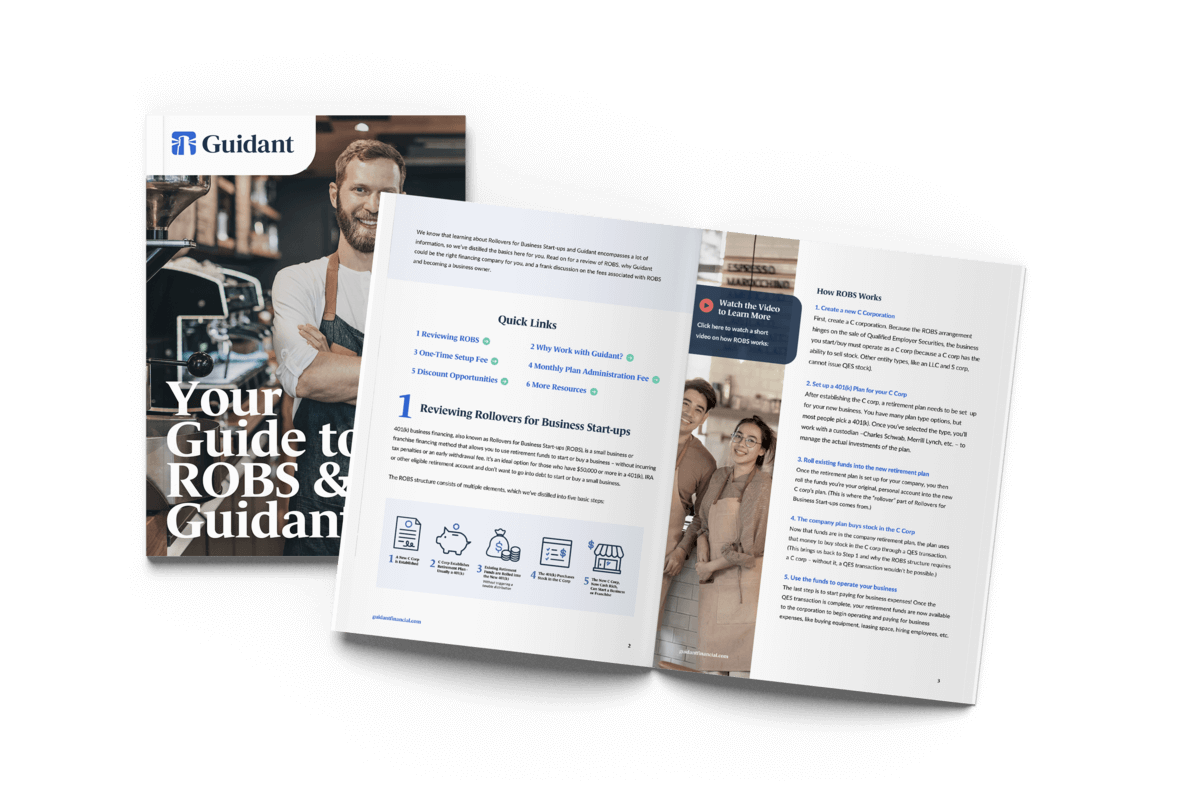
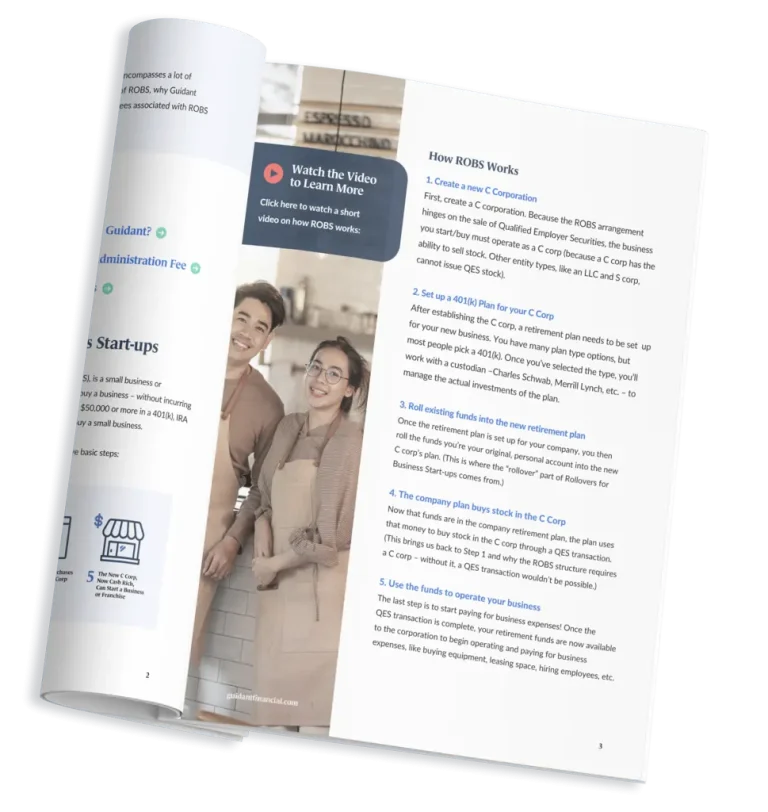
- 401(k) Business Financing (ROBS): Use your existing retirement savings to fund your business tax-penalty free and without monthly loan payments.
- SBA Loans: Government-backed loans with competitive rates and longer repayment terms, well-suited for buying an existing business.
- Unsecured Loans: Fast access to capital without collateral, ideal for startups or smaller funding needs.
- Portfolio Loans: Leverage your investment portfolio to secure funding without liquidating your assets.
Not sure which option fits your situation? Use our Business Financing Comparison Chart to see how each option stacks up.
The Bottom Line
Buying an existing business and starting a new one are both legitimate, proven paths to entrepreneurship. The best choice is the one that fits you, your goals, your risk tolerance, your financial situation, and the vision you have for your future.
There’s no universal answer. But you don’t have to figure it out alone.
Ready to Take the Next Step? Guidant Financial Is Here to Help.
Whether you’re buying an existing business or launching something brand new, Guidant Financial has helped thousands of entrepreneurs fund their dreams: debt-free and with confidence.
Here’s how to get started:
- Pre-qualify online in minutes. No commitment required.
- Call us directly at 425-289-3200 for a free, no-pressure consultation.
- Download our free Complete Guide to ROBS to learn how to fund your business debt-free.
Our team of financing experts will help you understand your options and build a personalized funding plan so you can stop dreaming and start doing.
Guidant Financial is with you every step of the way.