Buying or starting a business is one of the biggest financial decisions many people will ever make. Naturally, that means the funding decision deserves careful thought.
For some aspiring entrepreneurs, retirement funds represent one possible path to business ownership. But many people have been told for decades to never touch retirement savings until retirement. So when the opportunity to invest those funds into a business comes up, it raises an important question:
Is it better to leave your retirement savings in the market, or invest them into a business you control?
There isn’t a universal answer. The right choice depends on your goals, risk tolerance, and long-term financial strategy. But understanding how the process works – and what risks are involved – can help you make a more confident decision.
Addressing IRS Concerns Around ROBS
One of the first concerns people have when considering the use of retirement funds for business ownership is compliance with IRS regulations.
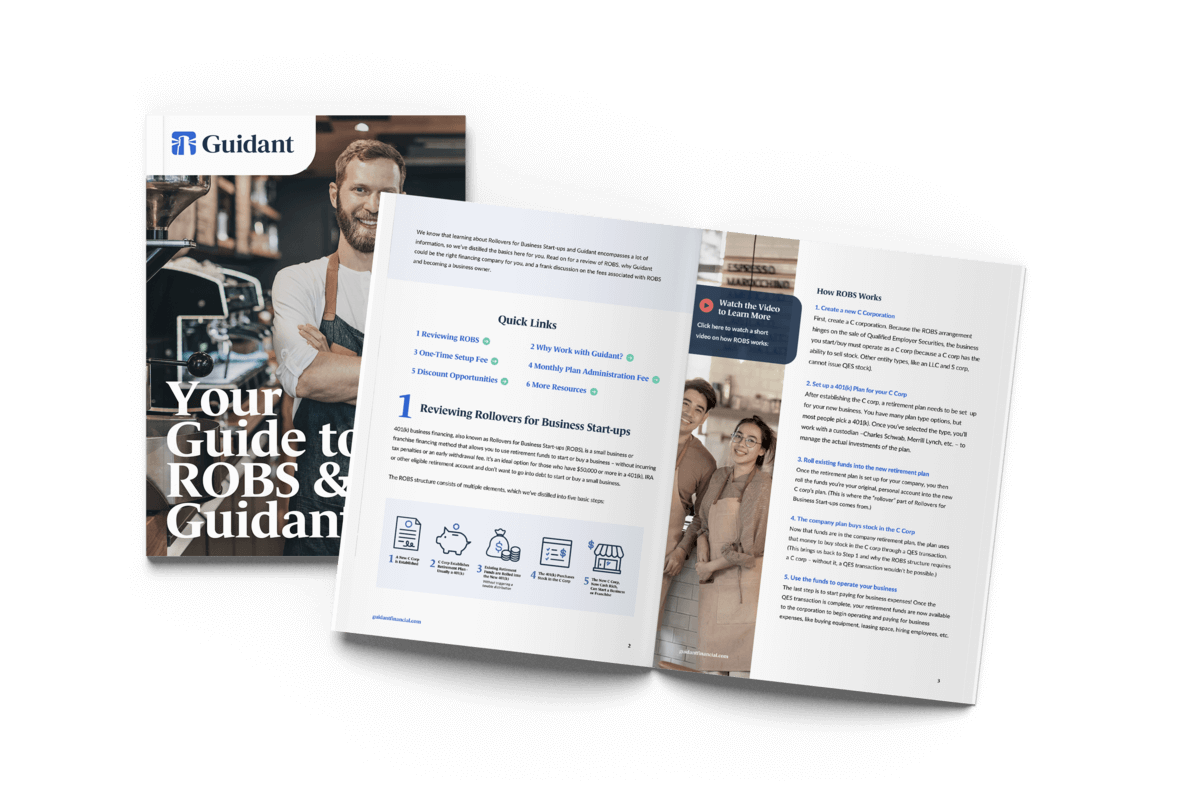
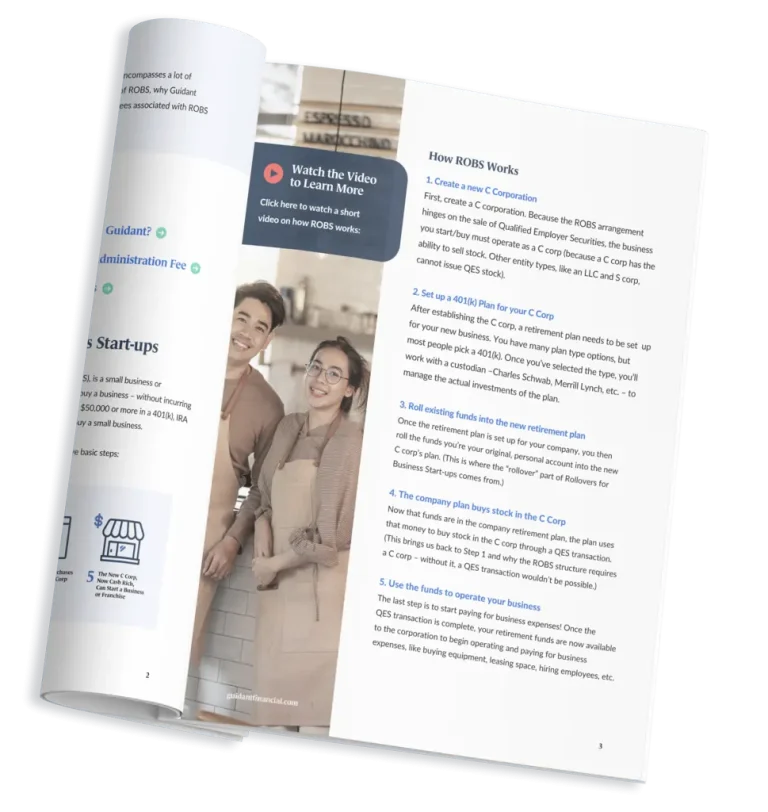
Using a ROBS (Rollovers as Business Startups) structure allows entrepreneurs to invest retirement funds into a business without triggering early withdrawal penalties or taxes. However, the structure must be set up and maintained correctly.
To minimize risk, it’s important to work with an experienced provider who specializes in ROBS administration.
At Guidant Financial, helping entrepreneurs navigate this process is our core focus. Our team helps ensure that:
- The plan is structured properly from the beginning
- Required paperwork and reporting stay compliant
- Clients have support if questions or audits arise
Our goal is to help business owners stay aligned with IRS guidelines so they can focus on building their business.
The Retirement Security Question
Another common concern is what happens if the business doesn’t succeed.
Using retirement funds to invest in a business means putting capital at risk – just as you would with any other investment. That’s why it’s important to think through possible outcomes ahead of time.
Failure doesn’t always mean losing everything. Even businesses that close often retain some value through assets, equipment, customer lists, or brand recognition.
Still, it’s helpful to think honestly about the worst-case scenario.
Ask yourself:
- What would my financial situation look like if the business failed?
- Would I return to a traditional job?
- Do I have other savings or investments to rely on?
- How much of my retirement funds am I comfortable investing?
If the potential downside feels manageable, you may feel more confident focusing on the opportunity rather than the fear. If the worst-case scenario feels unacceptable, that may signal that a different funding approach would be better.
Why Some Entrepreneurs Choose to Use ROBS
Many business owners decide to invest their retirement funds into a business rather than leaving them solely in the stock market. There are a few reasons why this approach appeals to some entrepreneurs.
Potential to Generate Income Immediately
Traditional retirement investments typically grow slowly over time and are largely influenced by market performance. Business ownership, on the other hand, may create an opportunity to generate income sooner, depending on the type of business and its performance.
Tax-Advantaged Growth
Funds used through a ROBS transaction remain inside a retirement account structure. That means the investment continues to benefit from tax advantages. If the business grows in value, the retirement plan’s equity in the company grows as well.
Diversification Beyond the Stock Market
Many retirement portfolios are heavily concentrated in stocks or mutual funds. Investing in a business can offer another form of diversification, allowing part of your retirement strategy to exist outside of traditional market investments.
Greater Control Over Your Investment
With market investments, performance is largely outside of your control. With business ownership, you play a direct role in decision-making – from strategy and operations to growth opportunities. For some entrepreneurs, that level of involvement is a significant advantage.
Important Considerations Before Using Retirement Funds
While the opportunity can be appealing, it’s important to approach the decision thoughtfully.
Before moving forward with a ROBS-funded business, consider the following:
- Your business strategy – Are you buying an established business or starting from scratch?
- Compliance requirements – ROBS plans must follow specific IRS guidelines.
- Your commitment level – Business ownership requires time, effort, and resilience.
- A contingency plan – It’s wise to have a backup strategy if the business doesn’t perform as expected.
Thinking through these factors early can help you make a more informed decision.
Is Using Retirement Funds the Right Move for You?
At the end of the day, deciding whether to use retirement funds to start or buy a business is deeply personal. Some entrepreneurs view it as one of the most rewarding investments they’ve ever made – allowing them to build something meaningful while potentially growing their retirement assets in a new way. Others prefer the stability of leaving their savings in traditional retirement investments.
Neither approach is inherently right or wrong. The key is making a decision that aligns with your financial goals, risk tolerance, and vision for the future.
If you’re considering this path, it’s important to take the time to understand how it works and connect with knowledgeable professionals who can help you determine whether it’s the right fit for your situation. Our team at Guidant is here to walk you through the risks of using your retirement funds to start your business and help you make an informed decision.
You can call 425-289-3200 to schedule a free business consultation, or take a few minutes to pre‑qualify for business financing online.
Or watch our quick YouTube video on “Should You Be Concerned About Using Your Retirement Funds to Launch a Business” at this link.