For over 20 years, I’ve led a company that has helped more than 30k new small businesses get started. I’ve also been a member of the Entrepreneurs’ Organization, a global organization of 18k entrepreneurs, for more than 19 years. Throughout that time, I’ve noticed a common pattern: entrepreneurs that burn themselves out in their businesses and cling to the hopes of selling their businesses as an escape. But most never sell because their business results keep fluctuating up and down like a roller coaster as they burn out, disengage, see things fall, and then re-engage.
Some believe that owning a business is just hard — and they’re not exactly wrong. Doing anything new for the first time is hard, whether that’s starting a new business, launching a new product, or learning how to ski (I still haven’t figured out that last one). But that’s not usually the real issue. The real issue is often how the entrepreneur thinks about time.
We are all wired, as humans, to gravitate to short-term rewards over long-term ones. Our 100k-year-old brains think they need that Oreo cookie because there’s no telling when we’ll come across edible food again. Only times have changed.
Food is abundant, and now, creates a problem of excess. Many of us fight ourselves constantly with dieting, food hacks, and supplements to offset that natural wiring. That might sound depressing to any of you who struggle with discipline around food, but all hope is not lost.
There are things to learn from the places in which we succeed regularly. One of those is with money, where we have a simple, proven approach to help us store up resources for the long run versus using them all up in the short run. This overlooked, but powerful, tool is a budget.
A budget forces us to get intentional about where to spend resources, based on what is needed to maintain the business and where we need to invest for the future we want. We know that our businesses won’t last long if we keep spending more than we bring in each month. What if we used a similar approach to our time?

If we don’t manage our time effectively, we risk burnout — and our businesses may suffer. Using a time budget can help us sidestep these challenges by guaranteeing that we set aside adequate time for all our commitments, including self-care and personal growth.
A time budget would consist of 168 weekly hours. With intention, we could lay out how much time we want to allocate for:
- Health: Sleep & exercise
- Personal Development: Reading, learning & reflection
- Relationships: Family and friends
- Work: Business & career development
- Contribution: Associations & charities
- Recovery: Relaxation & down-time
Once we have that budget, we can compare it to what actually happens. That may sound daunting if you’re someone who isn’t high on detail orientation, like me.
Finding a path that fits what you can sustain is critical. I’ve found I can do this through simple, easy-to-track standards, rather than attempting to map my calendar for every 15-minute increment of my life.
For example, I have set a target sleep score that gets tracked through my Oura ring, a wearable smart ring designed to track health and well-being. I’ve also created some commitments with my wife around work boundaries, essentially on what time constitutes the end of each workday. That creates a cap on my work budget.
The point is: there’s no one-size-fits-all approach to this. Anything that forces you to put intention around how you want to spend your time, and visibility to what actually happens, will be a tool that can create positive change in your life.
We don’t have to burn ourselves out as entrepreneurs. We don’t have to sacrifice relationships and our own health. We can make different choices about how to spend our time. But we can’t make different choices if we aren’t making those choices consciously. We use financial budgets to force us to allocate our financial resources consciously. Perhaps it’s time we adopted time budgets to allocate the most precious resource we have as entrepreneurs: our time.
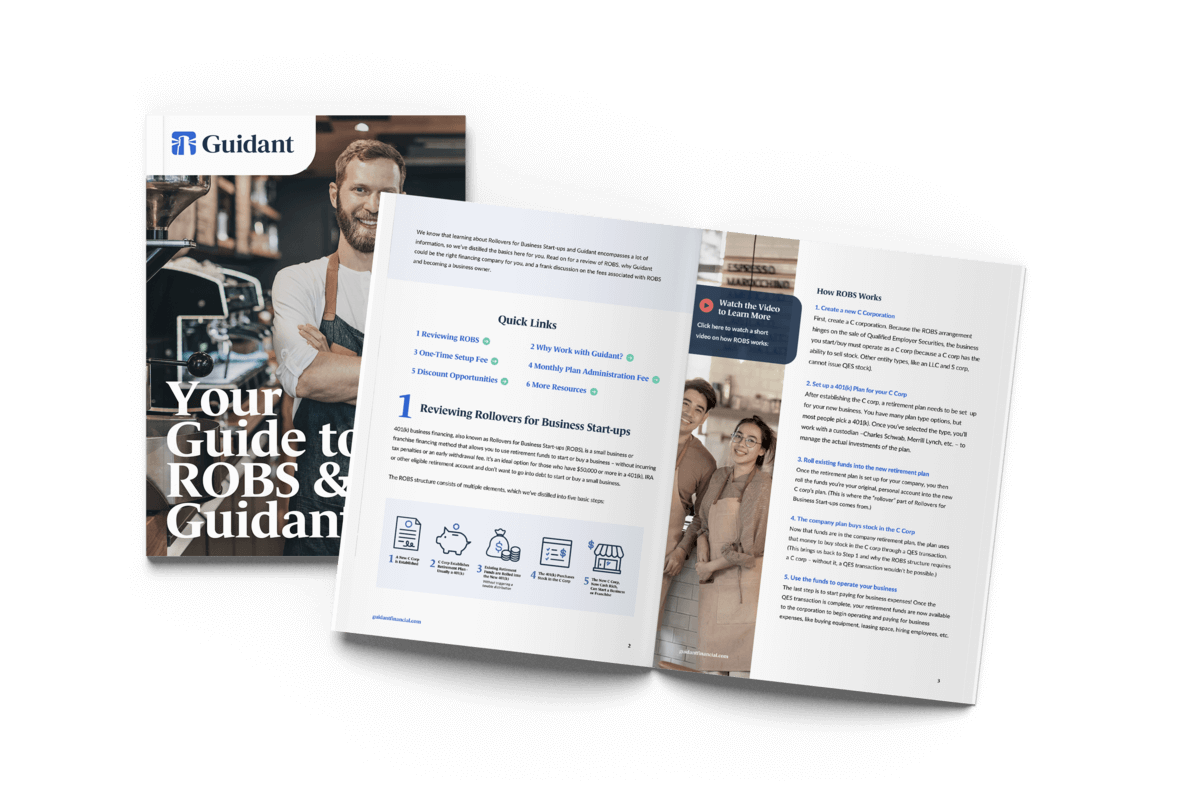
If you’re ready to take the next step and invest that time into your own business, Guidant Financial can help. With our expertise in Rollovers for Business Startups (ROBS), we provide a unique way to finance your entrepreneurial dreams using your retirement funds — without incurring early withdrawal penalties or taxes. We’ve successfully funded and supported over 30,000 businesses across the U.S. using ROBS and other innovative financing strategies. Ready to start your entrepreneurial journey? Contact us today at 425-289-3200 and let’s make your business dreams a reality.
Call us today at 425-289-3200 for a free, no-pressure business consultation to get started — or pre-qualify in minutes for business financing now!
Jeremy Ames is the Co-Founder and CEO of Guidant Financial, a company that has helped launch of over 30,000 small businesses since 2003. Jeremy’s experience as a business owner spans both franchises and start-ups. He has owned three franchise businesses across the real estate, personal services, and wellness sectors and also founded or co-founded five other businesses, including ventures in the media and business services industries. He is a staunch advocate for small business ownership, believing it to be the best route to personal and financial independence.