You’ve made the exciting decision to start a new business – congratulations! Embarking on this journey is thrilling, full of opportunities and challenges. But now that you’ve made this big decision, you’re likely wondering, “Where do I start?”
The good news is that every successful entrepreneur has been exactly where you are now. The key is to take practical, intentional steps that set you up for long-term success. Here are a few ways to get the ball rolling.
1. Start an Idea Journal
Every business starts with an idea, and the best way to generate and refine your ideas is to keep an idea journal. Whether you prefer a traditional notebook or a digital app, this journal can become a valuable tool for identifying problems and opportunities around you.
Here’s how to use it effectively:
- Observe everyday problems: Pay attention to the frustrations people have in their daily lives, including your own. Many great businesses are built on solving common pain points.
- List products and services you wish existed: If you’ve ever thought, “I wish there was a better way to do this,” that’s a potential business opportunity.
- Analyze existing solutions: Are there products or services you’ve tried that didn’t quite meet your needs? Could you improve on them?
Building the habit of recording ideas helps sharpen your ability to see opportunities where others don’t. Remember, the best ideas often come from small, thoughtful observations.
2. Focus on What You Know
One of the best ways to increase your chances of success is to build a business in an area where you have deep personal knowledge. Your lived experiences can give you a competitive edge, especially if you understand the market, the customers, and the challenges firsthand.
A Real-World Example: Catherine Ernst’s Gluten-Free Business
Take, for example, Catherine Ernst, one of our clients. Catherine had struggled with dairy and gluten intolerance for most of her life, which made eating out a challenge. Because of her personal experience, she was already intimately familiar with gluten-free products on the market and she wasn’t impressed.
Instead of settling for subpar options, Catherine started experimenting in her own kitchen. Over time, she developed better gluten-free recipes and eventually turned her passion into a successful bakery and cafe. She even created a proprietary gluten-free flour blend, which became a signature product.
The takeaway? If you know an industry well, look for unsolved or poorly solved problems. Like Catherine, you can use your expertise to find a better way to meet the needs of a specific customer base.
3. Borrow and Adapt from Other Industries
Innovation doesn’t always mean creating something entirely new. Some of the most successful businesses borrow concepts from other industries, business models, or even different parts of the world.
Here are some great examples:
Borrowing a Business Model
- eBay took the traditional auction model – something that had been around for centuries – and adapted it for online commerce. By bringing auctions to a digital marketplace, they revolutionized how people buy and sell goods.
Borrowing from Another Industry
- Warby Parker applied the direct-to-consumer model pioneered by Dell Computers and brought it to eyewear. By cutting out the middleman, they reduced costs and made prescription glasses more accessible.
Borrowing from Another Geography
- Howard Schultz, the founder of Starbucks, found inspiration for his company’s growth while traveling in Europe. He noticed that European espresso bars served as a “third place” for people – a social space between work and home. He brought that concept to the U.S., creating the Starbucks experience we know today.
4. Validate Your Idea Before Going All In
Before diving headfirst into launching your business, it’s important to validate your idea. Validation ensures that there is a real demand for your product or service before you invest too much time and money.
Ways to Validate Your Business Idea:
- Talk to potential customers: Conduct surveys or informal conversations to gauge interest and understand pain points.
- Create a minimal viable product (MVP): Develop a simplified version of your product or service and test it with a small audience.
- Look at search trends: Use tools like Google Trends or keyword research to see if people are actively searching for solutions in your niche.
- Run a pre-sale campaign: Platforms like Kickstarter allow you to test demand by letting customers pre-order before you manufacture your product.
By validating your idea early, you can make data-driven decisions that increase your chances of success.
5. Secure Funding When You Need It
Not every startup requires a huge upfront investment, but if you do need funding, it’s important to explore your options early.
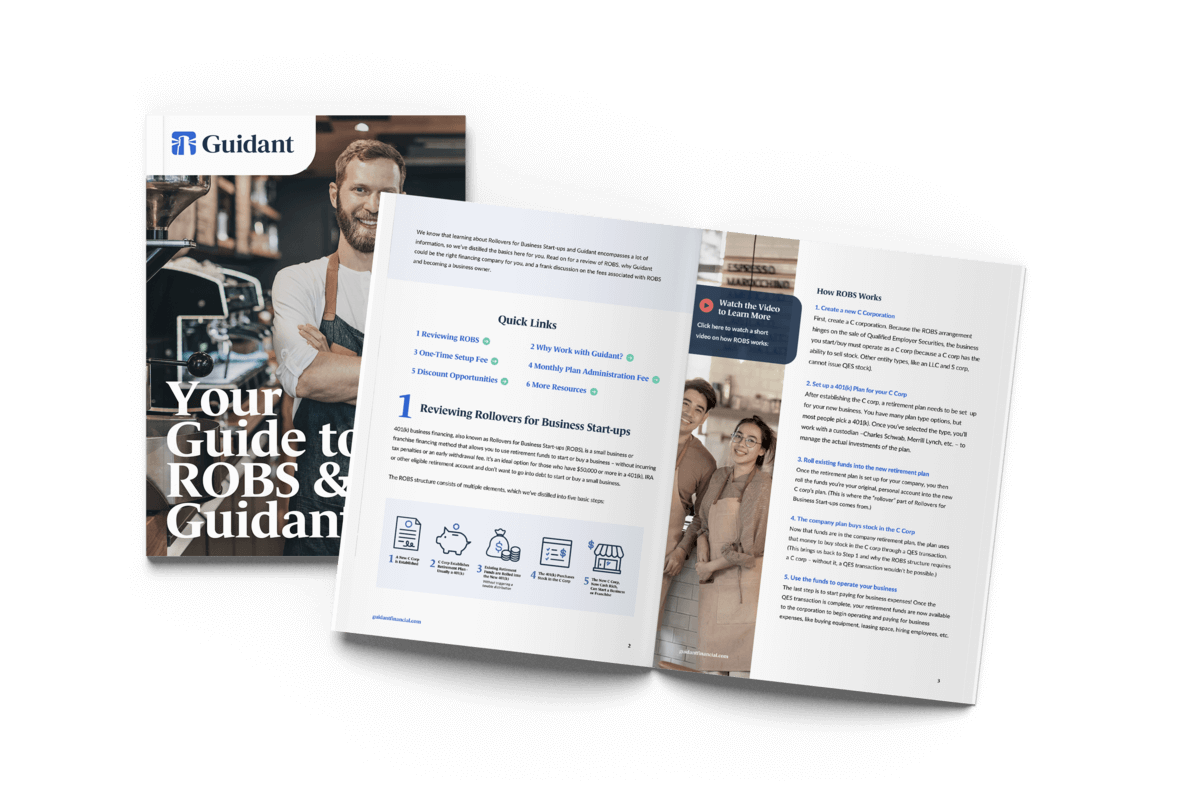
One financing option many entrepreneurs overlook is using retirement funds to invest in their business. With a ROBS (Rollover for Business Startups) strategy, you can access your 401(k) or IRA funds to start or grow your business – without taking on debt or paying early withdrawal penalties.
Is ROBS Right for You?
ROBS can be a powerful funding solution, but it’s not for everyone. It works best for:
- Entrepreneurs who want to fund a business without incurring debt.
- Business owners who have significant retirement savings they’re willing to invest.
- People who believe in their business enough to invest their own funds.
Our team at Guidant Financial specializes in helping entrepreneurs navigate this process. If you’re interested in learning whether using retirement funds to finance your business is the right move, we’re here to help.
Call us today at 425-289-3200 for a free, no-pressure business consultation to get started — or pre-qualify in minutes for business financing now!
Final Thoughts: Take Action Today
Starting a business is both exciting and challenging, but taking small, intentional steps can make the journey smoother. Here’s a quick recap of what you can do today:
- Start an idea journal to sharpen your ability to spot opportunities.
- Leverage your personal expertise to build a business in an area where you have an advantage.
- Look for inspiration from other industries and geographies don’t reinvent the wheel.
- Validate your idea before fully committing time and money.
- Explore funding options, including using retirement funds if it makes sense for you.
If you’re ready to take the next step in your entrepreneurial journey, our team at Guidant Financial is here to help.
Want the next light switch to flip on? Watch our quick YouTube video on “How Do You Find the Right Business to Start?” on this link. Or if you’re still not sure what type of business you want to build, take our Owner DNA Quiz.