When a friend sent Chris Murphy a listing for a dog kennel that was up for sale, he was excited right away. However, his wife, Michelle, had a lot of questions, so the both of them sat down to talk it through.
If you’ve ever wondered how to start the conversation with your spouse about starting a business, plenty of Guidant clients have been in that spot. They’ve sat across the kitchen table from the person they love, working out whether this was something they both wanted, and many of them went on to build a business together.
Why Talking to Your Spouse About Starting a Business Can Feel So Big
Chances are the idea has already come up once or twice, maybe as a “what if” over dinner or a daydream on a long drive. Somewhere along the way, though, it may have started to feel more real to you. You’ve scrolled through listings, run the numbers in your head, and maybe even pictured your name on the sign out front, while your spouse may still think of it as a fun idea rather than something you’re seriously considering. That difference is natural, and it’s a big part of why the conversation matters. You’re both coming at the same idea from different places, and you’ve probably both thought about the practical side too, from the mortgage and the kids to steady paychecks and whether the timing feels right. So, if either of you hesitates, it usually isn’t a vote against the other. More often, it just takes a little time to get to the same place, and talking it through together is how you both get there.
It also helps to remember that couples are rarely wired the same when it comes to risk, and that can turn out to be an advantage. Just ask Kathy Boyce, who bought a title company in Livingston, Texas, with her husband, Ron, using his retirement savings. Kathy sums up their dynamic this way: “I’m the risk-taker, and he’s the safety guy.” Ron wasn’t sure about the move at first, but Kathy gave him a gentle push because she believed in his expertise. Today he runs the title work while she handles the bookkeeping, insurance, and staff. The very differences that made their early conversations tricky are what make their partnership work.
Work Through the Big Questions Together
You don’t need a finished business plan, just a handful of questions to talk through when you sit down together:
- What kind of business sounds right for both of you, and would you rather buy an existing one or start from scratch?
- How much will it take to get going?
- How long might it take to turn a profit?
- What happens to your household income in the meantime?
- What’s the worst realistic outcome, and could you both live with it?
Neither of you will have every answer yet, and that’s fine. The 10 steps to starting a business are a good way to start finding them, since they give you a shared outline to work from and make it easier to see how the pieces fit. Ron Boyce, the safety guy of the Boyce partnership, keeps his advice simple. He recommends “planning ahead of time and get a game plan together and make sure there’s a reasonable chance you’ll have some success.”
Starting the Conversation
There’s no perfect script for this, but a few things tend to help. The first is timing – a stressful week or the five minutes before someone heads out the door isn’t the best moment, so it’s worth finding a calm stretch and letting your spouse know you’ve been thinking about the business idea more seriously and would like to talk it through, with no decisions needed that night.
When you do sit down, start with the why before you get into the numbers. Maybe it’s more control over your time, a dream one of you have had for years, or an opportunity that may not come around again. When Joel Cheek’s corporate career ended after 30 years, he told his wife, Laura, “I was never working for corporate America again.” Laura didn’t argue. “Let’s try this,” she said. “Nobody’s going to retire you and nobody’s going to fire you.” Together they bought Earl’s Quality Car Care in Peachtree City, Georgia.
For the Murphys, the why turned out to be their daughter, who was in high school and hoped to become a veterinarian. Once Michelle saw the kennel through that lens, her skepticism started to fade. “We thought, what if we created something she could grow into?” she said.
Just as important is listening to each other. Be sure to ask your spouse what’s on their mind, and try not to answer every concern with a counterpoint. Their questions are worth having, because they’ll often catch gaps in the plan that you missed. And give it time. Big decisions rarely get settled in one sitting, so leave room to sleep on it and expect to come back with new questions.
Talking Openly About Money
For a lot of couples, money is the real question underneath all the others. A new business can mean a smaller or less predictable income for a while, and that touches everything from the mortgage to retirement plans. The most helpful thing you can do is lay it all out together: what it would take to get started, how long your savings could carry you, what a tough first year might look like, and what your backup plan would be.
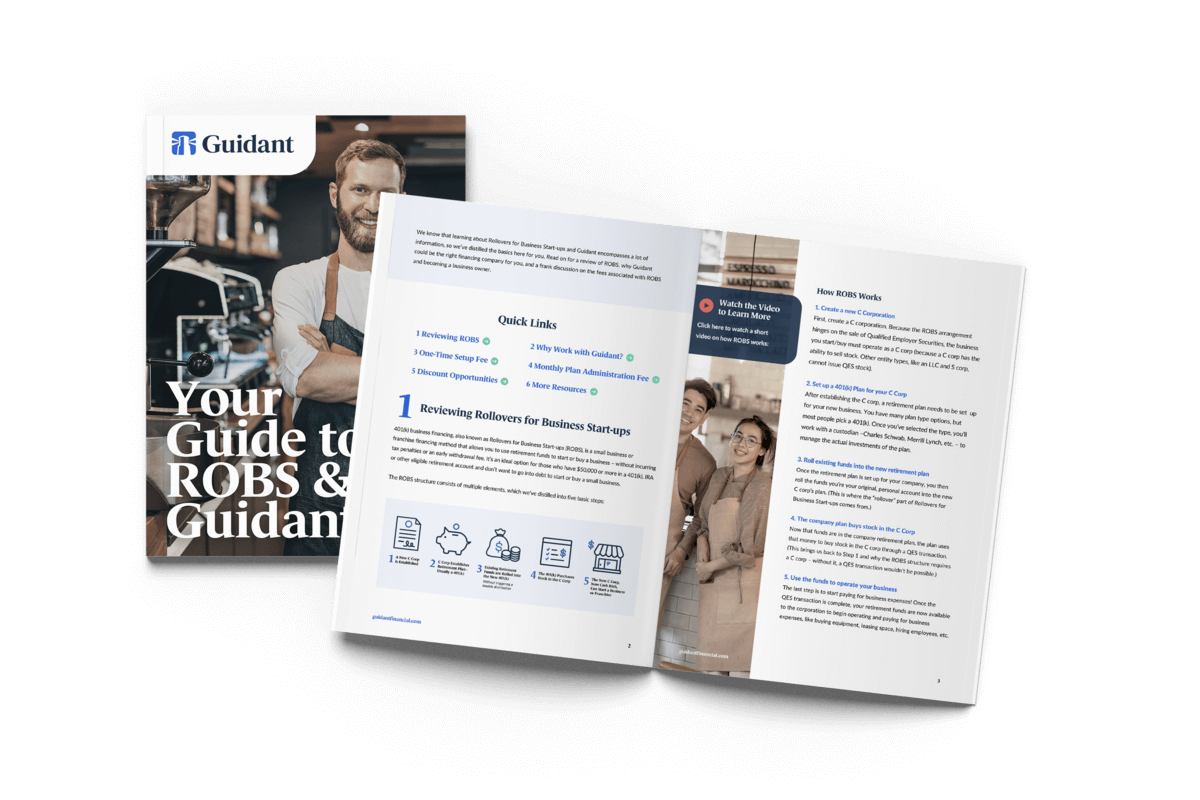
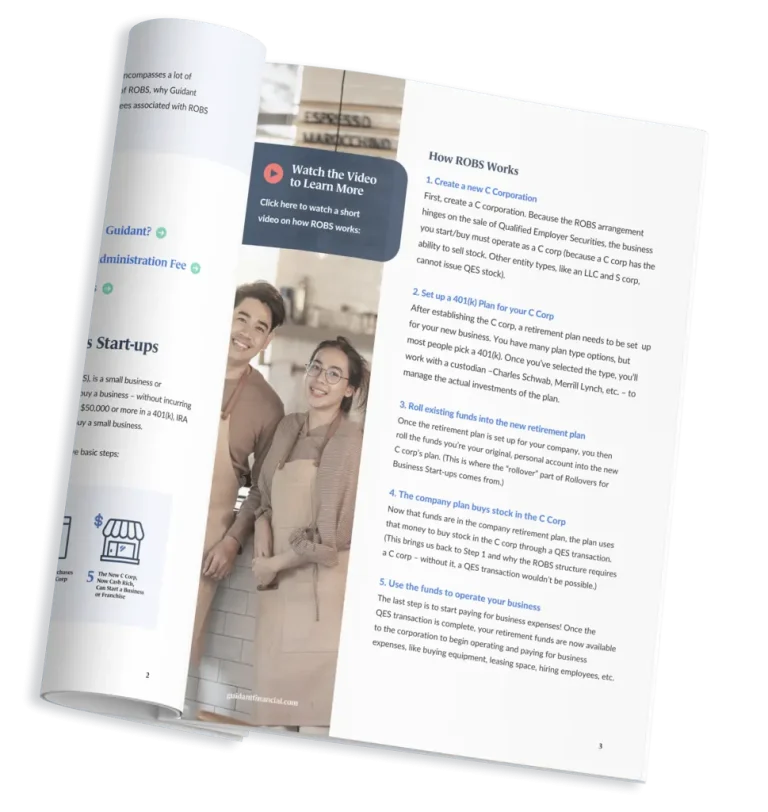
Another thing that helps is looking at more than one way to pay for it. There are more small business funding options than most people expect, including SBA loans, unsecured loans, portfolio loans, and 401(k) business financing, also called Rollovers for Business Startups, or ROBS. ROBS lets you invest your retirement savings in your own business without paying taxes or early withdrawal penalties, and without monthly loan payments.
That’s how the Murphys got started. Most of their savings were tied up in retirement accounts and the stock market, so Chris began looking into options, and it led them to Guidant. “Chris found Guidant, and it was a game changer,” Michelle said. They reached profitability in their first year.
Using retirement money is a big decision, and if one of you feels uneasy about it, that’s a fair concern to bring up. It’s worth reading up on the risks of using retirement funds together, so you’re both making the choice with the same information.
Deciding Who Does What
If you plan to run the business together, it helps to talk about roles early. Couples who make it work rarely split everything down the middle, and tend to divide the work by strengths. Michelle Murphy kept her full-time job as an assistant vice president at a Fortune 500 company and took over the kennel’s finances, payroll, taxes, and compliance, while Chris brought years of management experience from Cracker Barrel and runs the day-to-day operations and hiring.
Read more about how Michelle and Chris Murphy made the leap into business ownership together.
At the Cheeks’ auto shop, Laura draws on her investment banking background to handle the money and bookkeeping while Joel runs the shop and works with customers. Joel puts it simply: “Respect. I respect her position, she respects my position. It’s 100% trust.”
Richard and Jo-Anne Hoad used ROBS to buy The Parsonage Inn, a bed and breakfast on Cape Cod, and they divide the work in much the same way. Jo-Anne handles the cooking, housekeeping, decorating, and the garden she loves, while Richard manages the finances, marketing, and social media. They both welcome guests, which Richard calls “one of the most rewarding things.”
Even if only one of you will be running the business, your spouse is still part of it, so talk about how involved each of you wants to be and how you’ll handle the days when work follows you home.
Challenges to Keep in Mind
Couples who’ve been through it are honest that it isn’t always smooth. James and Jeanine Pruitt talked about owning a bed and breakfast the night they met, and today they run Rustic River Cabins in Estes Park, Colorado. The early years tested them, though. Jeanine took on the accounting and struggled with it. “I think it did hurt my relationship a little bit,” she said, and James remembers it the same way: “We were starting to get really tense there at the end.” It took five years before they took their first vacations.
What got them through, in Jeanine’s words, was “our communication, because we love each other.” Habits like regular check-ins, clear roles, and protected time away from work go a long way, and these tips for working with your spouse are a good place to start.
It’s also normal for one of you to be more excited than the other, and that doesn’t mean you’re out of sync. Neither of you has to match the other’s enthusiasm on day one. What helps is that you both understand the plan, feel heard, and trust that it’s been thought through, which is a more realistic goal than full agreement right away.
The Bottom Line
Learning how to talk to your spouse about starting a business is less about making a pitch and more about working out together whether it’s right for the two of you. Share what’s drawing you to the idea, talk through the practical questions as a team, be open about the money, and give each other the time you need.
None of the couples in this article had it all figured out at the start. Michelle Murphy was skeptical, Ron Boyce wasn’t sure, and the Pruitts hit some rough patches along the way. What they all had was a willingness to keep talking, and as Jeanine Pruitt put it, “It really took two people to be on board with the same dream.”
If you’re still early in the process, you might start by reading about whether entrepreneurship is right for you and sharing it with your spouse, since it can give the two of you something concrete to talk about. And for more inspiration, you can read the stories of other couples who built their businesses together.
Ready to Take the Next Step Together?
If you and your spouse are starting to align on the idea of business ownership, the next step is understanding your financing options. Guidant’s team can walk you through what’s available, what fits your situation, and what the process actually looks like.
Guidant Financial has helped over 35,000 entrepreneurs successfully use 401(k) business financing to start or buy a business.
Call 425-289-3200 to schedule a free business consultation, or take a few minutes to pre-qualify for business financing online.